Beyond a cup of tea lie
the character of the land and the time passed down through generations.
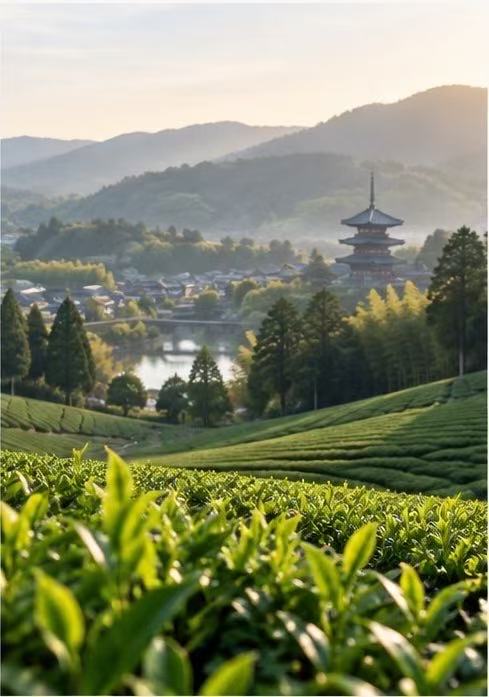
Uji, Kyoto.
When people hear “Japanese tea”, this may be one of the places that comes to mind.
Uji tea has a long history. According to the account presented by Uji City, its beginnings are traced to the early Kamakura period, when Myōe brought to Uji tea seeds he had received from Eisai. Uji tea's reputation then grew during the Muromachi period, and the area came to be recognized as an outstanding tea-growing region.
Umami created by shielding the light
Shade growing, called oishita saibai, is essential to any discussion of Uji tea cultivation.
As new shoots develop, the tea garden is covered to shield the plants from sunlight for a period of time. This shading helps produce leaves with a vivid green color, a distinctive aroma, mellow umami and sweetness.
In Uji today, this method continues to be used to produce tencha, the raw material for matcha, and gyokuro.
One traditional method is honzu covering, using reed screens and straw. Such covered cultivation has a long history.
From matcha to sencha and gyokuro
Uji tea is special for more than simply coming from a famous place.
In Kyoto's Yamashiro region, cultivation and processing techniques developed that would contribute to matcha, sencha and gyokuro, three representative Japanese teas.
The development of sencha processing in the Edo period, followed later by gyokuro, reflects the major role Uji tea has played in the development of Japanese tea culture itself.
Carefully, one leaf at a time
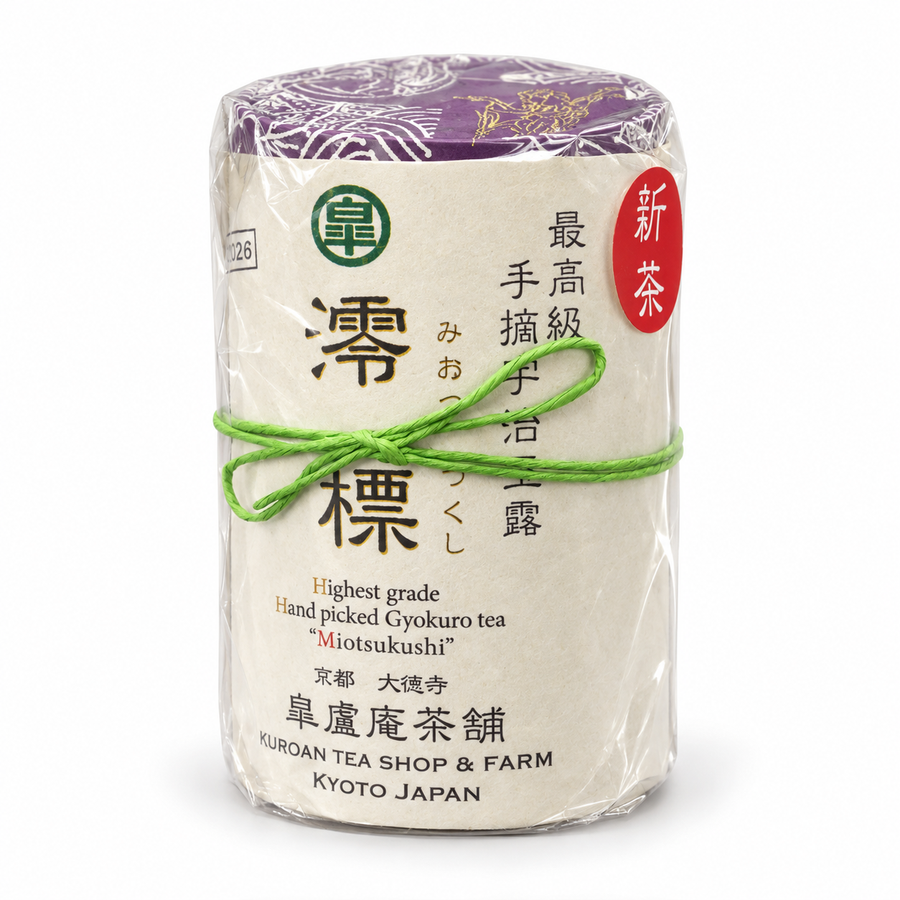
Even today, some tea gardens in Uji City continue the practice of picking new shoots individually by hand.
This makes it easier to select good new shoots while keeping older leaves and stems out, contributing to high-quality tencha, gyokuro and other teas.
Getting to know a place through a cup
Tasting Uji tea is about more than drinking a famous tea.
The knowledge behind covering a tea garden.
The handwork of recognizing new shoots and picking them one by one.
And the tea culture passed down through many generations.
A cup holds the time accumulated in that place.
At KOKUSELECT, we introduce Japanese tea together with the land, culture and stories of its makers, rather than presenting only the product.
Discover Japan, one cup of tea at a time.