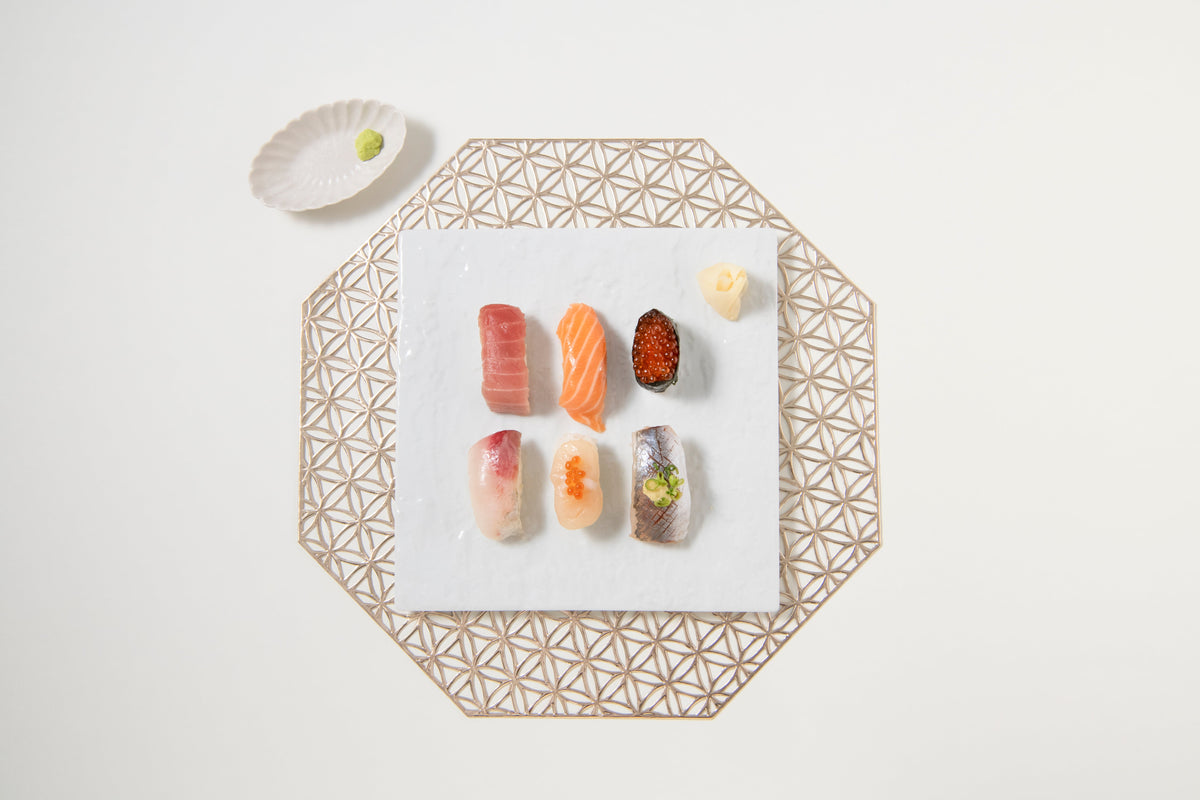
This cultural image introduces contemporary Mino ware. The tableware and food shown do not represent products sold by our store. Photograph: MUSUBI KILN / Wikimedia Commons (CC BY-SA 2.0). The same licence applies to the image cropped to fit the display.

A bowl for morning rice, a cup for a quiet break, a plate for seasonal food. Even the vessels we hold every day carry the long history of the place where they were made. Developed in the Tono region of Gifu Prefecture, Mino ware is a varied ceramic tradition that cannot be described by a single colour or shape.
Layers of ceramic history in Gifu
According to Toki City's official materials, the region's ceramic culture began with the making of Sue ware around 1,400 years ago. Over time, kiln structures, clays and glazes, and the lives of the people seeking tableware changed, giving rise to many forms of expression. Today, the name Mino ware does not refer to a single kiln or technique; it conveys the background of a diverse range of vessels across the region.
Particularly in the Azuchi-Momoyama period, the growing popularity of tea culture encouraged free experimentation with the forms and colours of vessels. They were made not only to be admired, but to be held, drunk from and used in a tea gathering. The aesthetic that grew from this relationship also connects with the pleasure of choosing tableware for life today.
Shino, Oribe, Ki-Seto and Setoguro
Shino, Oribe, Ki-Seto and Setoguro are among the representative Momoyama ceramics of Mino. In Shino, for example, a milky white glaze made with feldspar and reddish-brown fire marks appearing here and there create a gentle expression. Oribe is characterised by varied forms, painted decoration and combinations of colour, with a range that extends beyond the familiar image of green ware.
Knowing these names offers clues for looking at Mino ware. However, not all Mino ware made today uses the same techniques as in the Momoyama period. Some pottery carries on historical styles; other work includes porcelain and new designs for contemporary tables. It is also important not to infer handmade processes or official traditional-craft designation from the place of origin alone.
From tea vessels to the everyday table
Mino's ceramic region has expanded beyond tea wares into making tableware for daily use. How does a dish look with food on it? Does it stack neatly? Does it fit the hand when lifted? Imagining the way a vessel will be used reveals qualities beyond its appearance.
There is no need to buy a complete set from the start. Choose one plate for a familiar dish or one cup you would like to use every day, and try it with the tableware you already have. A deep plate may suit dishes with sauce; a moderately sized small bowl may suit a small serving. Consider uses while checking the vessel's dimensions and whether it is labelled for food use.
Appreciating variation and checking suitability
Variations in colour and the flow of glaze caused by firing are among the pleasures of ceramics. Individual differences, however, are separate from the question of whether a chipped or cracked vessel is safe to use. Check a newly arrived piece in good light; if there is anything unusual where it touches the mouth or hands, seek advice before using it.
Nor can one assume that all Mino ware is microwave or dishwasher safe. Suitability varies with whether it is pottery or porcelain, whether there is metallic decoration, and its glaze and shape. Follow the instructions for each product, including those for ovens and direct heat, and do not judge an unlisted function by appearance alone.
Care as part of living with tableware
After use, do not leave dirt on the surface for a long time; wash the piece according to its product information. Drain washed tableware and let it dry thoroughly before storing it, so it remains pleasant to use each day. Absorbent pottery and porcelain require different handling, and any preparation before first use should follow the guidance for the individual product. Not every vessel needs the same sealing treatment or prolonged soaking.
A tea gathering in a distant age and today's dining table are connected not only by knowledge of clay and glaze, but by the hands of people who use vessels every day. After learning a little about Mino ware's history, look for a shape that fits your hand or a colour that brings out your cooking. The story of the region becomes closer through a single vessel in daily life.
References: Toki City Mino Ware Official Brand Website, “The History of Mino Ware in Toki City”; Mino Ware Traditional Craft Cooperative, “Mino Ware as a Traditional Craft”; the cooperative's pages on Shino and Oribe. Check each product page for its intended uses, compatible appliances and care instructions.