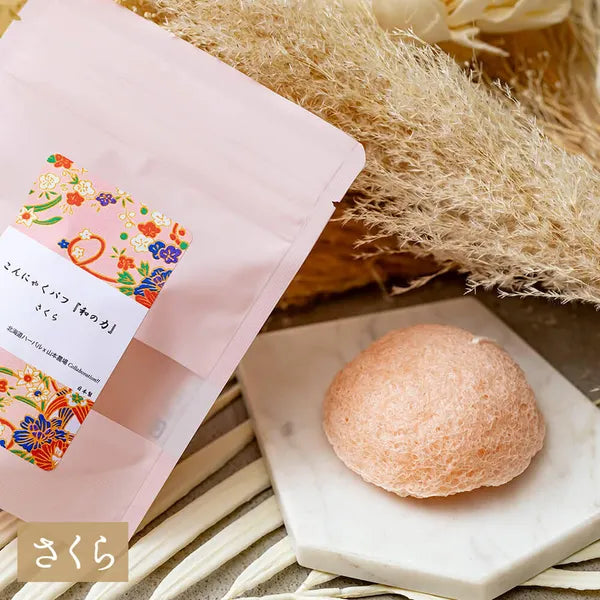
When it absorbs water, a small, hard puff becomes soft to the touch. A konjac cleansing tool offers an intriguing way to use a material familiar in Japan in another part of daily life. Edible konjac and cleansing puffs are not the same thing, but both begin with the konjac plant and its corm.
From the table to a cleansing tool
Konjac is made by processing the corm, or flour produced from it. There are several theories about when and how it reached Japan, so its arrival cannot be attributed to a single account. Passed down in regional food traditions, konjac is now produced in several areas, with Gunma among the main producing regions. Growing the plants, making flour and combining it with water to give it form have supported local industry.
Konjac cleansing sponges are made from this material. This does not mean that everyone in the past washed their face this way. Their appeal becomes clearer when we see them as contemporary care tools that make use of a familiar Japanese material.
Freezing and drying create the sponge structure
山本農場's 和の力 puffs are made in a dedicated factory in Japan, using flour derived from konjac corms grown in Gunma Prefecture. In the process described by the manufacturer, konjac flour is mixed with water and a setting agent, shaped and heated, then repeatedly frozen and thawed before drying. Before use, the processed puff absorbs water, swells and becomes soft.
The same range includes versions with different ingredients, such as charcoal worked into the material or added Japanese yuzu powder. Rather than assigning benefits based only on a colour or a plant's name, check the ingredients and instructions for the individual product.
Soften thoroughly and cleanse without pressure
The first point is not to apply a dry puff directly to your skin. Following the manufacturer's guidance for 和の力, soak it in warm water and gently knead it until it is fully expanded through to the centre. Remove makeup first, then move the puff over the skin with a light, stroking motion. If using soap or a facial cleanser, lather it well and avoid scrubbing. The guidance also describes use without soap, but the puff is not a substitute for a makeup remover.
Even a soft material can put stress on the skin if rubbed repeatedly. Focus on letting it absorb enough water rather than on applying more pressure. Avoid areas with wounds or eczema, and stop using it if you experience pain, redness, itching or other symptoms.
Aftercare is part of the routine
After use, gently knead and rinse the puff under tap water, then press it between your palms to remove excess water. Twisting and wringing can damage its delicate structure. Always give priority to the storage instructions on the product's packaging or enclosed leaflet. 山本農場's official guidance also describes draining the puff, placing it in a container and refrigerating it, but this must be checked for each product. Do not leave it in the bathroom indefinitely; if unsure, ask the retailer before use.
The manufacturer's approximate guide is around one month of use, but this varies with its condition and frequency of use. Do not use a puff with mould, an unusual smell or tears, even within that period. Being naturally derived does not mean that it needs no care or will suit everyone.
What matters is not seeking dramatic changes, but understanding the material and keeping it clean in use. Wash, rinse and put away: even these small actions offer a way to welcome a Japanese material into everyday life.