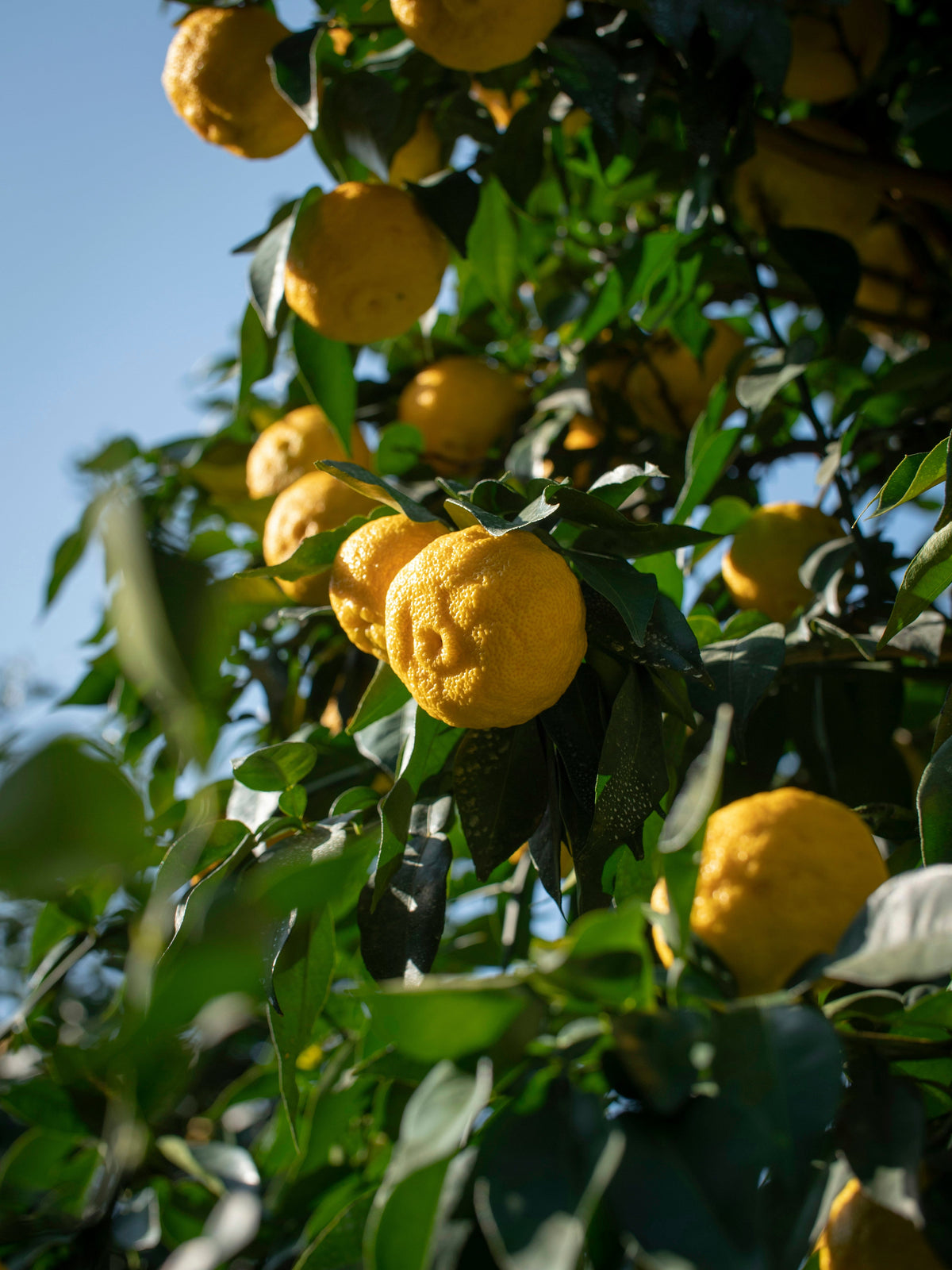
An ingredient reference photograph introducing Japanese yuzu. It does not establish the ingredient origin or supplier of products sold by our store. Photo: Jinomono Media / Unsplash (Unsplash License).
Touch the peel and a fresh, faintly bitter yuzu fragrance rises. In Japan, yuzu has been enjoyed not only as a finishing touch to food, but also in seasonal practices such as a yuzu bath at the winter solstice. Today its ingredients and scent can also be found in hand creams and cleansing tools.
Food and bathing traditions that mark the season
Taking a yuzu bath at the winter solstice is one of Japan's traditions for acknowledging a turning point in the seasons within everyday life. What matters here is not connecting yuzu to medical effects, but the culture of sensing the season through the fruit's colour and scent.
In food, the juice and peel have helped shape regional flavours. Kochi has a culture of pairing food with sour citrus, including yuzu, known as 酢みかん; yuzu juice is also called ゆのす. A drop with a hot pot or fish dish, or finely sliced peel used as a garnish: a fragrance that can change the impression of a table even in small quantities has been passed down as an everyday pleasure.
Knowing the producing regions reveals a scent's background
Kochi includes places closely associated with yuzu, such as Kitagawa Village, Umaji Village and Monobe in Kami City. Yuzu has also been grown in 木頭, 那賀町, Tokushima Prefecture, making use of its mountain environment. The history of cultivation and processing differs from one region to another, even for the same fruit.
The name yuzu alone does not mean that every product's ingredients come from the same place. Distinguish whether an origin of Kochi Prefecture is confirmed, whether a product says Japanese-grown, or whether no origin is given. This is a first step in choosing with care for place. The fruit's growing origin and the place where a cosmetic is manufactured should also be read as separate pieces of information.
Peel, seeds and extracts: different roles
Cosmetics incorporating yuzu may contain ingredients with different names, such as peel oil, fruit extract or seed oil. Are they used for fragrance or to moisturise the skin? Checking their stated purposes in the product description draws attention to the intention behind the product, not just the impression its name creates.
For example, デイリーアロマジャパン's 高知県産YUZU hand cream describes Kochi-grown yuzu essential oil as a fragrance ingredient, and yuzu seed oil and yuzu fruit extract as moisturising ingredients. The brand's descriptions also introduce extraction of essential oil by steam distillation. These points are confirmed for that product; they do not mean that every yuzu cosmetic has the same formulation or extraction method.
Bring it gently into everyday care
For hand cream, first clean your hands, then apply the amount directed on the label. Rather than layering it to project a stronger scent, choose a feel that suits you, taking work and mealtimes into account. Products for the face, hands, bathing and room fragrance each have a different purpose. Liking a scent does not make a room-fragrance product suitable for skin use.
A konjac puff containing yuzu is another option. The official manufacturer information for 和の力 introduces a version with added Japanese yuzu powder. Check the specific ingredients on the product you purchase. A konjac puff is a cleansing tool, not the same kind of moisturising cosmetic as a yuzu hand cream. Soften the puff thoroughly with water and use it gently, then follow the product's storage instructions afterwards.
Do not decide on the phrase “naturally derived” alone
Natural fragrances and plant-derived ingredients do not necessarily suit everyone. Avoid applying them to wounds or eczema, and stop using a product if redness, irritation or itching develops. We also do not recommend applying food juice or undiluted essential oil directly to the skin here. Choose products intended for skin use and follow the purposes and methods stated on their labels.
Living with yuzu is not only about seeking a special effect. Learning about the work of people in the growing regions, noticing a seasonal fragrance and choosing small tools that suit your own life: together, these experiences can make everyday moments a little richer.
References
- Ministry of Agriculture, Forestry and Fisheries: Winter solstice and yuzu baths
- Ministry of Agriculture, Forestry and Fisheries: Kochi's yuzu and 酢みかん culture
- Ministry of Agriculture, Forestry and Fisheries: Yuzu cultivation in 木頭
- デイリーアロマジャパン: 高知県産YUZU Hand Cream
- 山本農場: Yuzu konjac puff
- 日本化粧品工業会: Precautions when using cosmetics