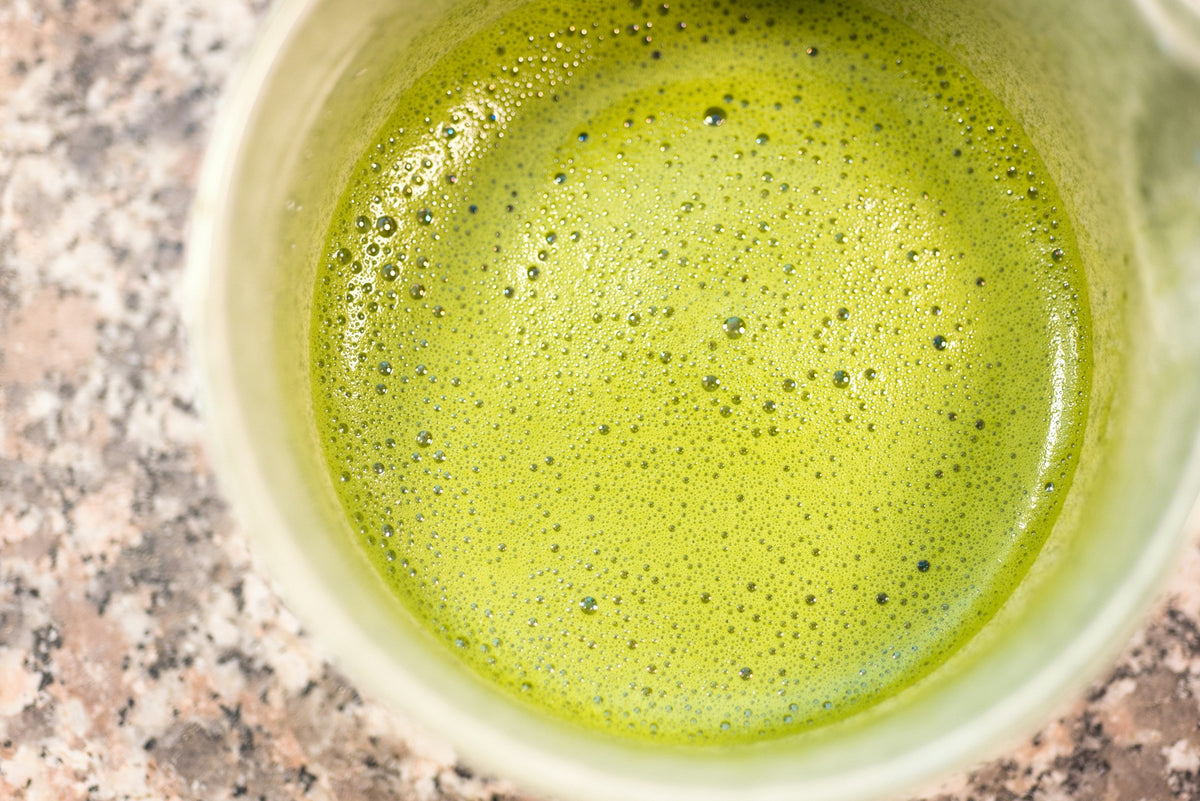
A cultural reference photograph of matcha taken in Japan. This is not a photograph of cosmetics or products sold by our store. Photo: Zed Can / Unsplash (Unsplash License).
The scent of tea unfolds beyond the steam. Pausing to enjoy a cup creates a small break in a busy day. Hand creams with fragrances that evoke Japanese tea, and face masks formulated with tea-derived ingredients, also bring the pleasure of choosing materials and scents into everyday care.
Inherited tea culture and contemporary beauty products
Japanese tea varies richly with its place of origin and production method. Matcha is made by finely grinding tencha: tea leaves grown under shade, steamed and dried without rolling. The culture passed down alongside chanoyu is supported by the work of tea growers, finishers and makers of tea vessels.
The history of tea as a drink and the functions of contemporary cosmetics should, however, be considered separately. The long-standing familiarity of tea in Japan does not mean that matcha cosmetics have always been used in the same form. Enjoying regional materials in new ways through modern formulations and fragrance design is one of the connections between tea and beauty today.
Beyond the name “matcha”: reading the label
Tea leaves, tea-leaf extract and tea-leaf water are among the different tea-derived ingredients used in cosmetics. Containing a tea-derived ingredient and having a fragrance inspired by matcha are also different pieces of information. Check the ingredient names, their stated purposes and the fragrance description separately on the packaging.
For example, デイリーアロマジャパン's MATCHA range has a background in a project to restore tea fields in Minamiyamashiro Village, Kyoto Prefecture. Its official descriptions introduce ingredients using tea leaves and flowers. The face mask and hand cream list tea-leaf water and tea-flower water as skin-conditioning ingredients. These specific explanations offer a clearer way to understand a product's relationship with a place than an abstract phrase such as “the power of tea”. This provenance and formulation cannot, however, be applied to every other brand's matcha products.
Use a face mask for the specified time
When choosing a sheet mask, check the order of use, time to leave it on and frequency of use, as well as its scent and materials. Open it with clean hands, align it with your eyes and mouth, and remove it after the time stated on the product. Do not assume that longer is better or leave it on until dry. Avoid uses not described in the instructions, such as wearing it while sleeping.
Enjoying the scent while allowing yourself a short, unhurried interval is one way to approach care. Taking care over a daily routine is not the same as seeking dramatic beauty effects. Follow each product's instructions for care afterwards as well.
Hand cream between everyday tasks
Try incorporating hand cream when your hands feel dry, such as after washing them or before going out. Apply an appropriate amount to clean hands and gently work it over the backs of your hands and fingertips. Alongside fragrance preferences, consider whether it feels sticky, how convenient it is to carry and how it fits your usual activities.
The name or colour of matcha alone is not a reason to expect skin whitening, acne improvement or rejuvenation. Understand a cosmetic's function in terms of its formulation and labelling, and refrain from use on wounds or eczema. If redness, itching or other abnormalities occur, stop using it and consult a dermatologist if necessary.
Keep drinks and skin products separate
We do not recommend turning drinking matcha directly into a homemade facial pack here. Foods and cosmetics have different purposes and ways of use. Enjoy tea as tea, and use products made for the skin according to their labels. Respecting that distinction makes it easier to enjoy Japanese tea as part of daily life.